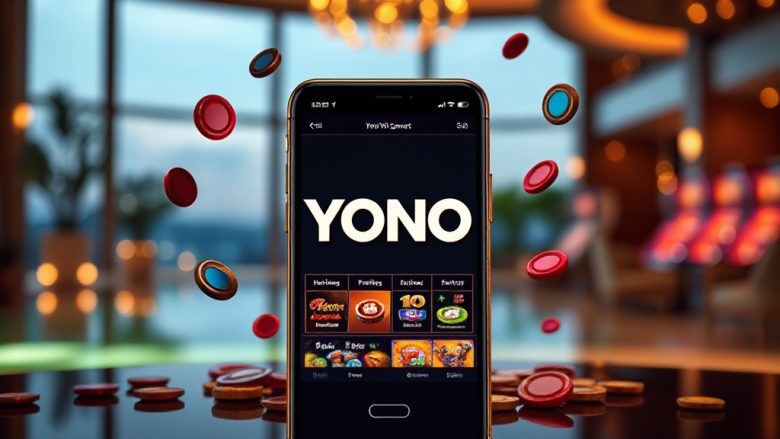
The Words Around the All Yono Games App and Why They Matter
The phrase All Yono Games App sits in an unusual position. It reads partly like a product name and partly like an invitation. On one side, it is a label — a way of gathering several games, a download, and a set of services under one heading. On the other, the word “All” does quiet persuasive work, suggesting completeness, inclusion, and a single place where nothing is missing. That tension is worth examining, because the language that surrounds a gaming app shapes how readers understand what they are being offered and what they are deciding to do.
This is not a review of any particular game, nor a set of instructions for downloading anything. It is a close reading of the vocabulary that tends to appear around the All Yono Games App — the words of bonuses, downloads, and access — and a consideration of why that vocabulary deserves a second look from adult readers who are used to making their own choices.
The Vocabulary of Arrival: Invitations and Open Doors
Gaming platforms rarely describe themselves as products to be evaluated. More often, they describe themselves as places to arrive at. The language of the All Yono Games App tends to lean on verbs of entry and access: download, install, join, unlock, access, get started. These are not neutral words. They frame the reader as someone standing outside a door, with the app presented as the handle. The implicit message is that the difficult part is simply getting in, and that once inside, everything else follows.
Notice how often the phrasing avoids the language of purchase or commitment. A reader is seldom told to “buy” or “subscribe.” Instead, the vocabulary softens the transaction into something closer to hospitality. The app is “available,” the games are “included,” the bonus is “waiting.” This is the grammar of welcome rather than the grammar of commerce. For adult readers, that distinction matters, because a welcoming frame can make a financial decision feel like a social one — a matter of accepting an invitation rather than weighing a cost.
The word “All” in the name does similar work. It promises that the reader will not have to choose between one game and another, or between one feature and the next. Completeness is reassuring. But completeness is also a claim, and claims deserve scrutiny. When a name says “all,” the reader is entitled to ask what is actually included, what is not, and whether the sense of abundance is a description or a mood.
The Language of Bonuses: Generosity as a Frame
Perhaps no vocabulary around the All Yono Games App is more carefully chosen than the vocabulary of bonuses. Words like “free,” “bonus,” “reward,” “welcome offer,” and “extra” appear frequently, and they do a specific kind of emotional work. They reposition a transaction as a gift. The reader is not simply signing up; the reader is receiving something. That shift from exchange to generosity is one of the oldest moves in persuasive writing, and it is effective precisely because it feels pleasant rather than pushy.
But a bonus is rarely unconditional, and the words around it often carry the conditions at a distance. Terms like “eligible,” “qualifying,” “wagering,” and “subject to” tend to appear later, in smaller type or in a separate section. This is not unique to gaming, but it is worth naming, because the order of information is itself a form of persuasion. When the reward comes first and the condition comes later, the reader’s first impression is shaped by the gift, and the cost arrives as an afterthought.
For readers sensitive to persuasion tactics, the useful habit is to read the bonus sentence twice: once for the offer, and once for the verb. Is the bonus something the reader “gets,” or something the reader “must claim,” “must wager,” or “must qualify for”? The difference between those verbs is the difference between a gift and a contract. The All Yono Games App, like most platforms in this space, uses the warmer verbs first — and that is exactly why the cooler verbs deserve attention.
The Vocabulary of Download and Trust: Safety Words in a Mobile Context
The download is where the language becomes most practical and, in some ways, most revealing. Phrases like “APK download,” “install,” “compatible,” “secure,” and “official” cluster around this step. These are trust words. They exist to reassure a reader who is being asked to put software on a personal device — a genuinely consequential action. The word “official” in particular is doing heavy lifting, because it implies a source that can be verified and a process that has been sanctioned.
Yet trust words are also easy to overuse, and readers benefit from distinguishing between reassurance and evidence. A page can say “secure” without explaining what security means in practice. It can say “official” without showing how a reader would confirm that. The vocabulary of the All Yono Games App around downloads tends to be confident and brief, which is appropriate for a mobile audience but also places more responsibility on the reader to look for specifics: where the file comes from, what permissions it requests, and what the platform says about device compatibility.
This is not a reason to distrust every download page. It is a reason to read the words as claims rather than guarantees. The phrase “download the app” is an instruction; the phrase “download the official app safely” is an instruction wrapped in a promise. Adults who are used to evaluating software elsewhere — checking app stores, reading permissions, comparing sources — can apply the same habits here. The vocabulary of trust is a starting point for verification, not a substitute for it.
The Tone of Withdrawal: Sober Words in a Warm Room
The most interesting tonal shift around the All Yono Games App comes when the subject turns to withdrawals. Here the language tends to become more procedural: “withdrawal,” “processing,” “request,” “verification,” “method.” The warmth of the bonus vocabulary cools considerably. This shift is telling. It suggests that the persuasive energy of the platform is concentrated at the point of entry, while the point of exit is described in the neutral language of administration.
For adult readers, this asymmetry is worth noting without alarm. Every platform has to describe withdrawals accurately, and procedural language is often the honest choice. But the contrast between the invitation at the front and the process at the back is a useful reminder that a gaming app is a system with rules, not simply a place of welcome. The words of withdrawal — “may take,” “subject to verification,” “depending on method” — are the words that tell a reader what the relationship will actually feel like over time.
A copy-conscious reader can use this contrast as a kind of diagnostic. Read the bonus paragraph and the withdrawal paragraph side by side. Which one is written with more care? Which one answers more questions? The comparison reveals where the platform’s attention goes, and that revelation is more useful than any single claim.
A Closing Reflection on Reading the Words
The All Yono Games App is, in the end, a collection of words as much as a collection of games. The name invites, the bonus vocabulary warms, the download vocabulary reassures, and the withdrawal vocabulary administers. None of these registers is inherently dishonest, and none is unique to this platform. But together they form a persuasive environment, and adult decision-making is best served by noticing that environment rather than absorbing it.
The practical takeaway is simple and unglamorous: slow down at the verbs. Notice when a sentence offers rather than explains. Notice when the reward arrives before the condition. Notice when the language of trust substitutes for the details of trust. The words around the All Yono Games App are not there by accident, and reading them closely is one of the few forms of protection a reader fully controls.