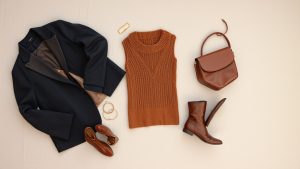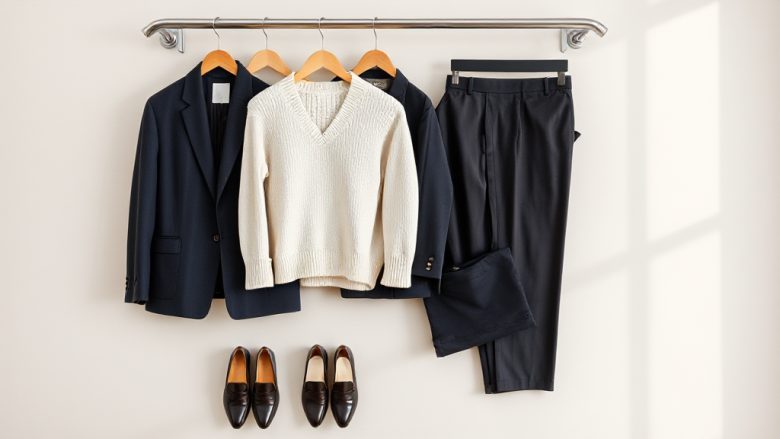
You probably own five pieces that can carry an entire workweek. A plain white or light blue shirt. A neutral blazer. Dark tailored trousers. A simple knit or fine-gauge sweater. A pair of clean leather loafers or low heels. That’s it. No hidden capsule wardrobe, no expensive shopping list.
Learning how to style basic outfits for work isn’t about buying more. It’s about a repeatable formula that turns those five pieces into ten distinct outfits, each one sharp enough for a meeting and comfortable enough for a full day at a desk. This guide gives you the formula, a ten-outfit grid, the fit and fabric checks that separate polished from sloppy, and the mistakes that quietly ruin otherwise good looks.
The Formula: Base, Layer, Accent
Every strong work outfit has three jobs: something against the body, something that adds structure or warmth, and something that gives the eye a place to land. Think of it as base, layer, accent. That’s the whole system.
The base is the piece closest to your skin — a shirt, a knit, or a blouse. It decides the mood. A crisp collared shirt reads formal; a fine knit reads relaxed but still professional. Keep bases plain. Pattern belongs in the accent, not here.
The layer is what you put over the base — a blazer, a cardigan, a structured overshirt. The layer controls the silhouette. It should sit on your shoulders cleanly and end at a flattering point, usually at the hip bone or just below. Too long and it swallows you; too short and it looks like you borrowed it.
The accent is the detail that finishes the look: a belt, a scarf, a watch, a pair of shoes, a bag. One accent is enough. Two is fine if they echo each other. Three and the outfit starts arguing with itself.
Here’s why the formula works. It forces you to think in roles rather than items. Once you know a base needs a layer and an accent, you stop staring at a full closet and start assembling. The same five pieces can play different roles depending on how you combine them, which is exactly how you get ten outfits from five things.
Two rules keep the formula honest. First, keep the palette tight: neutrals plus one colour. Navy, grey, black, cream, camel, and one accent shade like burgundy, olive, or dusty blue. Second, vary texture, not pattern. A smooth shirt under a ribbed knit over a wool blazer gives depth without noise.
The Ten-Outfit Grid
Here’s how the five basics multiply. Treat the shirt and knit as your two bases, the blazer and cardigan as your two layers, and the trousers plus shoes as your fixed anchors. Mix them and you get ten combinations that all look intentional.
One: shirt, blazer, trousers, loafers. The default. Clean, formal, works for almost any office.
Two: knit, blazer, trousers, loafers. Softer than the shirt version, still structured. Good for days with one important meeting.
Three: shirt, cardigan, trousers, loafers. The cardigan replaces the blazer and drops the formality one notch without losing polish.
Four: knit, cardigan, trousers, loafers. The most relaxed of the set. Save it for quieter days or casual Fridays.
Five: shirt alone with trousers and loafers, sleeves rolled once. No layer. The base does all the work. Add a belt as the accent.
Six: knit alone with trousers and loafers. A fine knit tucked or half-tucked reads deliberate, not lazy.
Seven: shirt under the blazer, knit draped over the shoulders instead of worn. This is a styling trick that adds a layer without bulk and looks considered.
Eight: knit under the blazer with the shirt collar peeking out. A small detail that makes a plain combination look tailored.
Nine: shirt with the cardigan buttoned and a structured bag as the accent. The bag does the work the blazer usually does.
Ten: knit with the blazer and a scarf in your accent colour. The scarf becomes the focal point, so everything else stays quiet.
Notice that the trousers and shoes never change in this grid. That’s deliberate. Anchoring the bottom half removes decision fatigue and guarantees the outfits stay coherent. Once you’re comfortable, swap the trousers for a midi skirt or the loafers for a low heel and the same ten outfits still hold.
Fit and Fabric Checks Before You Leave
Two people can wear the exact same outfit and look completely different. The gap is almost always fit and fabric, not taste.
Start with the shoulders. On a blazer or cardigan, the seam should sit at the edge of your shoulder, not past it and not pulled inward. This single point does more for how put-together you look than any accessory. If the shoulders fit, a tailor can fix almost everything else.
Then check sleeve length. Blazer sleeves should end at the wrist bone so a centimetre of shirt cuff shows. Cardigan sleeves should stop at the wrist without bunching. Sleeves that swallow your hands make even expensive fabric look borrowed.
Trouser length matters just as much. A slight break at the shoe is right. A pool of fabric around the ankle reads sloppy, and it’s the easiest fix in the book — most dry cleaners hem for a small fee.
Fabric is the quiet signal. Look for natural fibres or high natural blends: cotton, wool, linen, viscose. They drape, breathe, and hold a press. Thin synthetic knits tend to pill and cling, which undoes an otherwise sharp outfit by mid-morning. A mid-weight wool trouser and a cotton shirt will outlast three fast-fashion versions and look better every time.
One last check: press your shirt and steam your knit. Wrinkles are the fastest way to make a good formula look careless. Two minutes with a steamer the night before saves ten minutes of panic in the morning.
Common Styling Mistakes That Undo a Good Outfit
Most work-outfit problems aren’t about missing pieces. They’re about small errors that pull attention in the wrong direction.
The first is too many focal points. A patterned shirt, a statement belt, a bright bag, and bold shoes all at once means the eye has nowhere to rest. Pick one hero per outfit and let the rest support it.
The second is ignoring proportion. A long, loose shirt over wide trousers adds volume everywhere and erases your shape. Balance works better: if the top is loose, keep the bottom closer to the body, and the reverse. A tucked or half-tucked base instantly restores waist definition.
The third is colour drift. If your neutrals lean warm in one garment and cool in another, the outfit looks slightly off without anyone being able to say why. Stick to one temperature family per outfit — all warm creams and camels, or all cool greys and navies.
The fourth is neglecting shoes and bags. These are the pieces people actually notice. Scuffed shoes or a sagging tote undermine an otherwise excellent look. Keep both clean and in good repair, and they’ll carry more weight than any new top.
The fifth is over-accessorising. A watch, a belt, and one more piece is usually the ceiling for a workday. Beyond that, the outfit starts to feel like a costume rather than a uniform you own.
A Two-Minute Morning Routine
Here’s the payoff. Because the formula is fixed, getting dressed takes almost no thought.
Minute one: pick your base and layer from the grid. Shirt or knit, blazer or cardigan. That’s four options before you’ve even looked at the weather.
Minute two: add your accent, check the shoulders in the mirror, and make sure your shoes are clean. If the shoulders sit right and the shoes are tidy, you’re done. Everything else is detail.
That’s the whole system. Five basics, three roles, ten outfits, and a morning that doesn’t require a decision. Learning how to style basic outfits for work isn’t about owning more — it’s about seeing the pieces you already have as parts of a formula. Master the base, layer, accent order and you’ll look put-together every day without buying a single new thing.
Frequently Asked Questions
How many basic pieces do I actually need for a work wardrobe?
Five well-fitting pieces can cover a full week if you choose them carefully: a plain shirt, a fine knit, a neutral blazer, a cardigan, and dark tailored trousers. Add one pair of clean shoes and a belt, and you have enough to build ten distinct outfits using the base, layer, accent formula.
Can I wear the same trousers every day without it looking obvious?
Yes, as long as you change the top half. Dark tailored trousers in navy, charcoal, or black read as a neutral anchor, not a repeat. Vary your bases and layers so the top half looks different each day, and the trousers simply disappear into the background.
What if my workplace is more casual than formal?
Keep the same formula and soften the pieces. Swap the blazer for a cardigan, choose a fine knit over a collared shirt, and pick loafers or clean minimal sneakers instead of heels. The base, layer, accent structure stays the same; only the formality of each piece drops.
How do I stop basic outfits from looking boring?
Vary texture rather than pattern. Combine a smooth cotton shirt with a ribbed knit, or a matte trouser with a slightly shiny shoe. Add one accent colour in a scarf, belt, or bag. Small shifts in texture and one controlled colour are what make simple outfits look deliberate instead of dull.